Japanese · August 14, 2026
Episode 1: Learn All 46 Basic Katakana with Cartoons
Learn the complete 46-character basic Katakana chart through sound rows, visual memory cues, useful words and active recall challenges.

Episode 01 · Absolute beginner
46 characters. Ten sound groups. Your complete Katakana start.
- Recognise all 46 basic Katakana
- Pronounce every sound row
- Recall kana with visual memory cues
- Read useful beginner words
Learn one row at a time
Vowels
ah — as in father
An arch opens on the left. Walk through and say ‘ah!’
- Try it
- アイス aisu
- Meaning
- ice cream
- Write
- 2 strokes · top sweep, then the long falling stroke
ee — as in see
oo — short and light
eh — as in met
oh — short and round
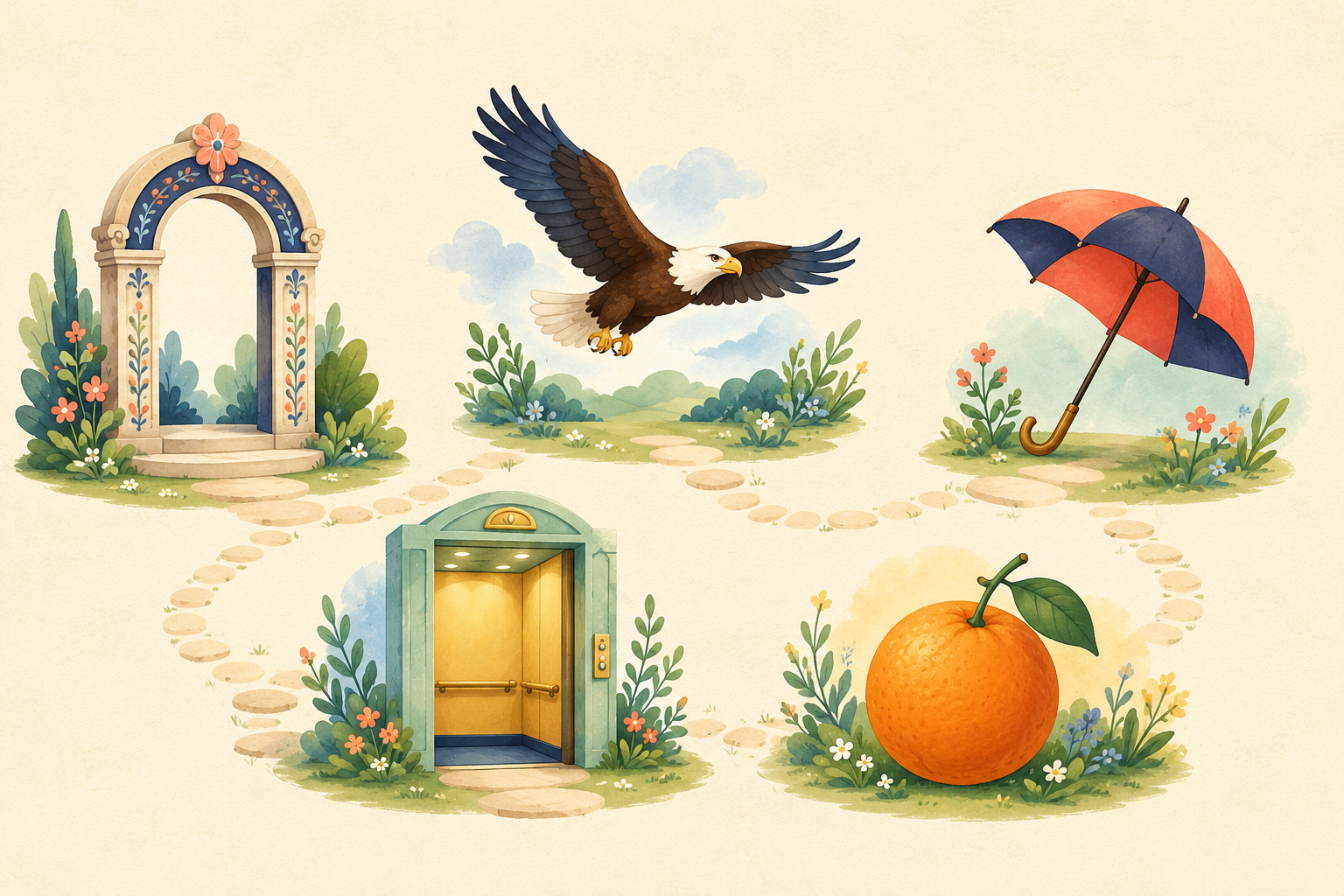
Two-second recall · 1 of 46
What sound does this make?
アChoose the sound without scrolling back.
- 10 min repeat one row
- Tomorrow mix two rows
- 3 days test the chart
- 7 days recall all 46
Katakana is the script Japanese uses for many foreign words, names, sound effects and modern terms. This complete first episode covers all 46 basic characters, organised into sound rows so you can learn the full chart without feeling overwhelmed.
The complete 46-character chart
Learn the rows in this order: ア・イ・ウ・エ・オ, then K, S, T, N, H, M, Y, R, W, and finally ン. The Y and W rows are shorter; that is normal. Tap a row in the chart, reveal its memory cues, and stay with that row until you can answer in mixed order.
The four-beat practice
For every character: look once, say it twice, trace it in the air, then hide the answer and write it from memory. Practise five characters at a time. After each row, use the two-second recall challenge before moving on.
Six sounds worth extra attention
シ is shi, チ is chi, ツ is tsu, and フ is a soft fu. ヲ is written wo but usually pronounced o when used as a particle. ン is the final nasal n sound and normally appears inside or at the end of a word.
Read useful words across the chart
カメラ kamera camera · シャツ shatsu shirt · テレビ terebi television · ナイフ naifu knife · ホテル hoteru hotel · メニュー menyuu menu · ヨーグルト yooguruto yogurt · ロボット robotto robot · ワイン wain wine · パン pan bread.
Build cartoon memory chains
Turn each row into one silly moving scene. A karate kick, key, cuckoo, keg and corner can carry the K row. A saddle, splashes, skier, shelf and sewing needle can carry the S row. Strange, colourful motion is easier to remember than a perfect picture.
A seven-day Katakana plan
Day 1: vowels and K. Day 2: S and T. Day 3: N and H. Day 4: M and Y. Day 5: R, W and ン. Day 6: mix all 46. Day 7: write the complete chart from memory, then read the example words aloud.
Episode 1 complete
You are ready when you can see any of the 46 basic Katakana in mixed order and say its sound within two seconds. Keep the chart nearby for review; the goal is confident recall, not one long perfect study session.
What comes after the basic chart?
Next you can add dakuten and handakuten sounds such as ガ, ザ, ダ, バ and パ, then small-character combinations such as キャ, シュ and チョ. These are sound variations built from the 46 characters you now know.