Japanese · September 12, 2026
Why LangCity Turns Japanese Practice Into an Adventure
LangCity transforms Japanese practice into a living RPG, where conversations, missions and city life make every new word useful.
Language study often begins with useful material and an awkward problem: the learner knows the answer on a flashcard, but freezes when a real person is waiting. LangCity is being built around that gap. It turns Japanese into something you use to navigate a world, understand people and decide what to do next.
A city where words have consequences
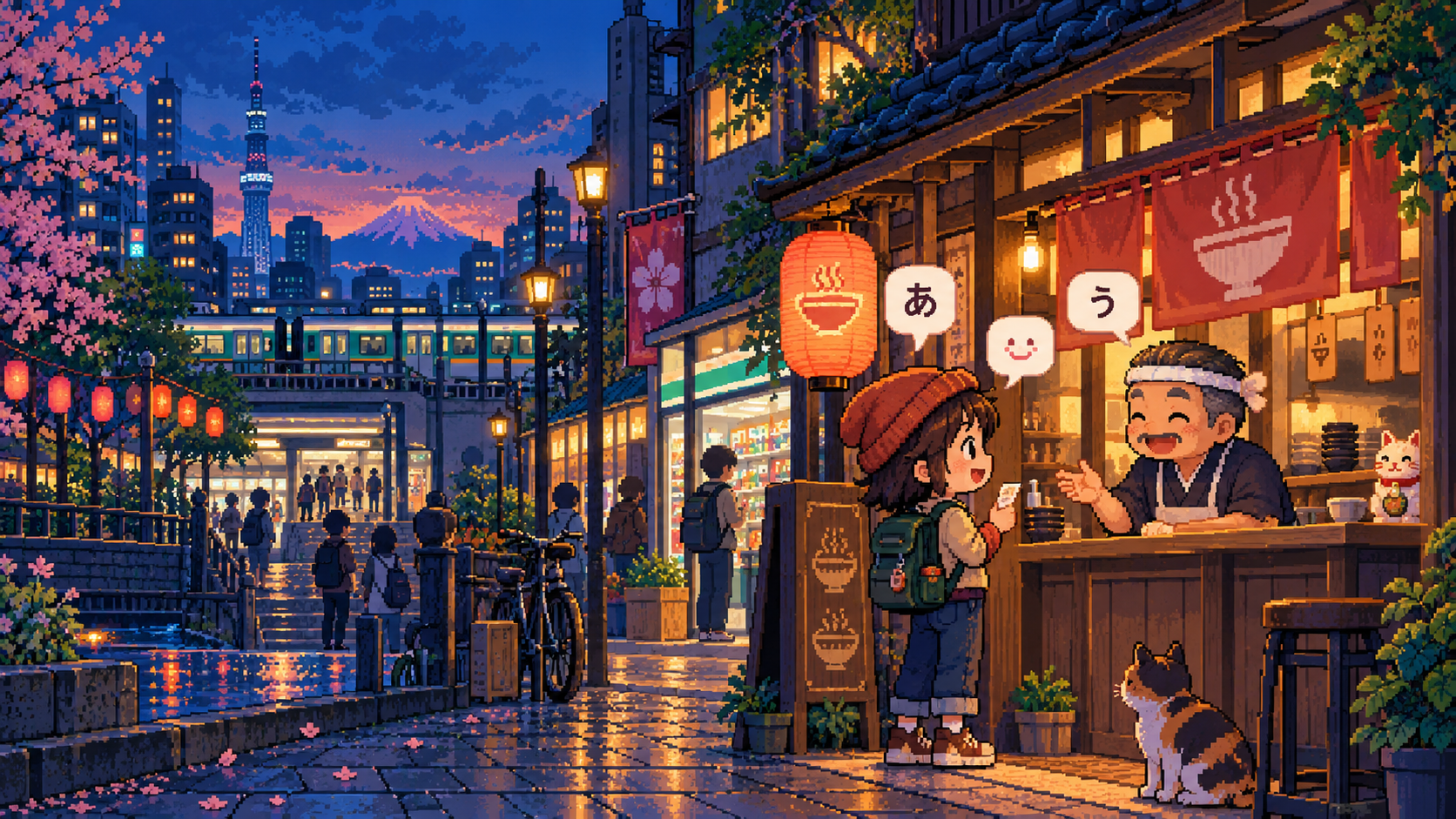
In LangCity, the city is not decoration around a lesson. It is the lesson. A station asks you to read signs. A café gives you a reason to order politely. A neighbour, teacher or shopkeeper introduces vocabulary because the conversation needs it—not because a chapter number says it is time.
That small shift changes the feeling of practice. Instead of translating a sentence for a score, you are trying to catch a train, choose lunch, help someone or unlock a new place. Meaning arrives before memorisation.
The learning loop
Each encounter follows a simple rhythm: notice, try, receive feedback and meet the language again in a slightly different situation. The game can turn the same Japanese into several kinds of practice:
Choose the reply that fits the moment.
Build a sentence from words you have already heard.
Listen for the phrase spoken by a character.
Say it aloud and compare your attempt.
Revisit difficult words later through missions and spaced review.
Because the practice is connected to a place and a character, the memory has more to hold on to. The goal is not to remove repetition—it is to make repetition feel like returning to a world.
From beginner confidence to natural conversation
A beginner needs safety: short exchanges, clear choices, romaji or translation when necessary, and permission to try again. As the learner grows, those supports can quietly disappear. Dialogues become less predictable, reading carries more of the story, and speaking becomes part of completing a mission.
Progress should also be honest. LangCity tracks vocabulary, grammar, reading, listening and speaking separately, so a high score in one skill cannot completely hide a weaker one. The displayed level follows the learner’s bottleneck and encourages balanced growth.
Why the world matters
Language is inseparable from context. The way you speak to a friend is different from the way you speak to a teacher, a customer or an immigration officer. A living RPG can make those relationships visible. Tone, place, timing and cultural cues become part of the experience instead of a footnote.
LangCity begins with Japanese and a Tokyo-inspired world, but the larger idea is broader: learning a language should feel like gaining access to a place, not completing a worksheet.
Explore LangCity and follow the journey as the town, its characters and its lessons continue to grow.